




 by Jan Korbel
originally published in Czech language at: http://www.radiodixie.cz
Republished with permission.
There are many soldiers who deserve to be mentioned by history. We decided to present in this article the story of one who earned the gratitude of his country and with at least one half of his roots belongs to Bohemia (or Moravia). The other half through his father's blood belongs to Slovakia. He has made both homelands of his parents proud.

The only photo we've been able to find - Capt. Otto Masny is the fourth from the left
"The President of the United States is happy to award the Cross of Merit to Otto Masny (O-1283639), a U.S. Army (infantry) Captain, for extraordinary heroism in military operations against an armed enemy which he performed as the Commander of Company F of the 2nd Rangers Infantry Battalion in the fight against enemy forces on June 6, 1944 in France." (part of the presidential speech at awarding the second highest U.S. honor to Capt. Otto Masny)


Rangers overcome the edge of a bloody cliff - a popular theme for painters of historical battle scenes
After basic training, he was promoted to a Sergeant and subsequently selected for the Officers' School where in May 1942 he graduated successfully and became a Lieutenant Sergeant. As an officer he then served in Fort Dix, where he had made decisions that changed his life forever. He enrolled in the newly emerging Rangers troops. With incredible luck he went through the entire French campaign of the Rangers, from the Normandy cliffs to the Hürtgenforest. There Capt. Masny’s luck ran out. But you will learn about that later. Now we shall return to the D-Day - June 6, 1944.
Bloody reef
The 2nd Battalion troops (hereinafter as Bn.), together with the 5th Bn. called the Provisional Ranger Group, were incorporated into the landing plan of Operation Overlord and temporarily assigned to the 116th Regiment of the 29th Infantry Division. Company F under the command of Capt. Masny, along with Companies D and E and the Command Squad, was part of Task Group A. Their task was to conquer and destroy the German artillery position on Pointe du Hoc. Landing time: 06:30 hours.

Ropes, ladders, and up under fire...
Unfortunately, the leading boat lost direction when it approached the coastline and headed straight to the Pointe de la Percée. But that was a tip of land three miles east of the planned destination. The Rangers realized the mistake, but it was clear that they would miss the place of landing. This mistake moved Capt. Otto Masny with his men on landing boats LCA 883, LCA 884 and LCA 887 east, 300 meters to the left ofthe area originally assigned to them. In addition, the LCA 884 when sailing to its destination was placed under strong enemy fire, which resulted in the first three wounded.

Rangers take cover against German fire in a crater at the top of the cliff
Two remaining boats of Company F managed to get to the shore without any losses and using anchors and ladders their crews began to climb the 30-meter cliff of Pointe du Hoc. Do not imagine it as a Sunday party; ropes soaked in seawater were slippery and the men slid on them like on spaghetti. On top of that, the Germans started to shower them with hand grenades and small arms fire. The number of wounded and fallen began to increase. It was clear that they all have to get up as soon as possible because only death was waiting below.

American soldiers rest at the top of the Pointe du Hoc cliff
With heroic effort the first Rangers got over the cliff edge beyond which they were welcomed by steel tornado from the German 20-mm cannon. Capt. Masny, who was wounded during the landing, let his wounds be temporarily treated and managed to overcome the pitfalls of the cliff along with his men. At the top, he got involved in a strenuous fight among the scattered groups of Rangers and German defenders.
Masny's company came under heavy machine-gun fire from a covered position. They did not know where the machine gun was, which 1st. Lt Hill eventually resolved very simply. He stood up and yelled, "You fucking bastards, you couldn’t hit shit even if you shot grenades as big as cart wheels!" To the shower of bullets coming toward him, he replied with a grenade that disabled the German machine-gun operator. This was the overture to the carousel of death, which continued on the following day. The 2nd Battalion of Rangers managed to fend off four attacks, but they were running short of everything - water, food and ammunition. Capt. Masny’s Company Fhad minimal losses, but only a few men remained from Company E and none from company D. Out of 225 men, who landed on June 6, only 90 soldiers (not uninjured) remained who could holda gun. Despite that, Pointe du Hoc was conquered and secured. This piece of bloody French soil had remained in the hands of allies. Capt. Masny and his Company F continued deeper into Europe.
Masny's company came under heavy machine-gun fire from a covered position. They did not know where the machine gun was, which 1st. Lt Hill eventually resolved very simply. He stood up and yelled, "You fucking bastards, you couldn’t hit shit even if you shot grenades as big as cart wheels!" To the shower of bullets coming toward him, he replied with a grenade that disabled the German machine-gun operator. This was the overture to the carousel of death, which continued on the following day. The 2nd Battalion of Rangers managed to fend off four attacks, but they were running short of everything - water, food and ammunition. Capt. Masny’s Company Fhad minimal losses, but only a few men remained from Company E and none from company D. Out of 225 men, who landed on June 6, only 90 soldiers (not uninjured) remained who could holda gun. Despite that, Pointe du Hoc was conquered and secured. This piece of bloody French soil had remained in the hands of allies. Capt. Masny and his Company F continued deeper into Europe.

One of the destroyed German bunkers at the top of Pointe du Hoc
Hürtgen Forest
It is a triangle with the area of approximately 130 square kilometers between German cities of Aachen, Monschau and Düren. A landscape broken up by deep wooded valleys that make it almost impassable. You can find this place on a map under the name of Hürtgen Forest. The American soldiers who fought here between September 1944 and February 1945 called it Green Hell.
Although the battle of Hürtgen Forest officially ended in February of the last year of war, the most important struggles were fought during three damp and cold months from mid-September to mid-December 1944 and cost the Americans 24,000 fallen, captured and wounded soldiers. Another 9,000 soldiers suffered so-called non-combat injuries, such as respiratory illnesses or trembling leg syndrome. The battles at this area were gradually joined by almost 120,000 U.S. soldiers assigned to troops of the 1st, 4th, 8th, 9th, 28th, 78th and 83rd Infantry Divisions. The armored fist consisted of the 3rd and 5th Armored Divisions.
Although the battle of Hürtgen Forest officially ended in February of the last year of war, the most important struggles were fought during three damp and cold months from mid-September to mid-December 1944 and cost the Americans 24,000 fallen, captured and wounded soldiers. Another 9,000 soldiers suffered so-called non-combat injuries, such as respiratory illnesses or trembling leg syndrome. The battles at this area were gradually joined by almost 120,000 U.S. soldiers assigned to troops of the 1st, 4th, 8th, 9th, 28th, 78th and 83rd Infantry Divisions. The armored fist consisted of the 3rd and 5th Armored Divisions.

Marching reinforcement
One of the soldiers, who advanced forward on the line of contact with the enemy in order to replace their colleagues, later wrote: "A crazy path full of mud we called the swamp led straight between the heaps of broken trees and branches. But much more terrible was the ceaseless convoy of jeeps moving against us. Each jeep was overflowing with wounded soldiers who sat wherever they could. Blood was streaking through their white bandages, but they were better off than those who were carried on stretchers and covered with blankets up to their chins."

Muddy Road
In the meantime, Company F of the 2nd Rangers Battalion under the command of Capt. Masny rested after a strenuous journey through northern France, during which it participated in a battle of the port of Brest defended among others by the 2nd Fallschirmjäger Division, but that was to change soon.
The unassailable hill
The American First Army was tasked to conquer and clean the Hürtgen Forest andat the same time, to cover the left side of the advancing VII. Brigade. But one “small” thing stood in the Americans’ way - a fortification called the Siegfried Line. The terrain in the area was dominated by a hill near the town of Bergstein. In the thirteenth century, the Burgeberg Castle stood on it and now the Germans used it as a useful observatory. The slope with 45-degree inclination was passable only for mountain goats. In addition, the hill was densely wooded, except for places from which the Germans enjoyed an unobstructed view on any movement of the Americans, which was immediately punished by an artillery grenade. It was the cornerstone of the German defense line. Its U.S. codename of Hill 400 was to enter the history of World War II.
The attack on Hill 400 was assigned to the 9thAmerican Infantry Division. In a month and a half (between September and mid-October) they managed to advance by three kilometers while losing 4,500 men. In early November, they were replaced by the 28th Infantry, which has not progressed at all and lost nearly 6,200 men. At the end of the month,they were replaced in the meat-mincer by the 4th Infantry Division. By the end of December, they had written off 6,100 men and passed the relay to the 8th U.S. Infantry Division. Charles MacDonald in his book called the Hürtgen Forest "the Argonne of World War II." The war correspondent and famous author Ernest Hemingway was briefer: "Passchendaele with explosions in treetops" (Battle of Passchendale or Third Battle of Ypres took place between July 31 and November 6, 1917).

Soldiers of the 28th Infantry Division in the Hürtgen Forest
The worst shit you have ever seen
A veteran. How grand does it sound? They wore a patch of the 2nd Rangers Battalion; they were the D-Day veterans who landed on the Omaha Beach and conquered the Pointe du Hoc cliff. Now they should serve as ordinary foot soldiers. Their specialization did not interest anyone, maybejust their motivation. On November 14, the 2nd Regiment Rangers including Company F of Capt. Masny joined the 28th Infantry Division. Its commander, General Norman Cota, who personally saw Rangers fight on the Omaha Beach, sent the 2nd Battalion to replace the 112th Infantry Regiment in the trenches. Troop A commander, Lieutenant Bob Edlin, walked with his men through snow-covered deep mud to the village of Geremeter. There the Rangers met with the Infantry from the 112th Regiment. Lieut. Edlin later recalled that soldiers of the 112th Regiment when retreating were throwing off the infantry gear in order to be able to flee faster. A friend he had in this unit, Captain Preston Jackson, said, "Bob, that's the worst shit you have ever seen. I wish you didn’t go there."

The Americans were not able to break through the German line in Green Hell even with tank support
Rangers continued on marching. It did not take long and they drew the attention of the German patrol of Hill 400. Within a moment, the whole troopwas under heavy artillery fire. Bob Edlin later recalled: "Suddenly shells started to rain. It was the purest hell I've ever experienced. Howling sound of the falling grenades, earth shaking underfoot, terrible noise, lumps and chips of stone hitting you, your chest pressed so much that you feared you might never breathe again, more and more of this until you thought that you just couldn’t stand it anymore."

German artillery and mortar fire was unbearable
But what startled the Rangers the most was not the enemy, but the Americans. Rangers from Company B were surprised by the sheer number of abandoned weapons, vehicles, guns and equipment, discarded or left behind by the Americans who retreated from there. Even worse was when the Rangers found that 112th Regiment abandoned their wounded and left them there. The 2nd Battalion’s doctor, Frank South, later recalled: "We moved into a shelter deserted by the Germans at the intersection of Vossenack. When we entered the shelter, we were shocked when we found several injured Americans there. Not only the 112th Infantry Regiment left their equipment and weapons, they alsoabandoned their own wounded! Of course, we took care of itand immediately evacuated them."

Rangers in occupied German positions
As far as winter equipment was concerned, the Rangers were very lucky because General Dwight D. Eisenhower visited them before the attack. The whole battalion gathered around him, and he suddenly asked if someone could tell him whythey didn’t have new shoes. One of the men cried out, "Fuck, General, we don’t know; we only know that everyone at the headquarters has gotten them." One of the veterans recalled after many years: "Everyone at the army, corps and division headquarters was wearing new boots, parkas and warm clothes but this gear never got to the front line. We still had summer clothes and the old thirties on our feet. General Eisenhower said he would take care of it, and in a few days we were given new shoes, clothes, and even wristwatches. He had to kick ass of the whole damn headquarters to get enough equipment for one Rangers Battalion."
When all fail, the Rangers step in
At the end of November, the 28th Division was withdrawn and replaced on the front line by the 8th Infantry Division. Rangers (including Masny’s Company F) remained, sitting in trenches, holding defensive positions and complaining. They had reason, too; from highly motivated and specially trained unit composed of volunteers they suddenly became common infantrymen.

On the American side, launchers were engaged in fighting in the Hürtgen Forest
Three American Infantry Divisions (9th, 28th and 8th), one after another, tried to conquer Hill 400, unsuccessfully. In the first week of December, the 5th Armored Division tried to do the same, but it was fended off with losses. Tanks of the 47th Armored Battalion managed to keep Bergstein against the German counterattack with all their might and was unable to get involved in another Hill 400 attack. In this hopeless moment, the Holly Spirit probably enlightened the Commander of the 8th Division, Gen. Weaver, who personally requested a Rangers unit from the V. Brigade commander, Gen. Gerow, and tasked them with the attack on Hill 400. He left both the plan and its implementation completely in the unit’s competence, trusting in their special skills and extraordinary motivation.

American M10 Wolverine Tank Fighter somewhere in a forest on the German border
All the Battalion Companies were driven by trucks to Kleinhau and from there they set out on foot for Bergstein. The Rangers treaded hard through darkness, mud and cold to get to Bergstein before dawn. They made it, but an unpleasant surprise awaited them. Capt. Slater contacted the command of the 47th Armored Battalion on the western outskirts of the town and asked the guides to move Companies A, B and C into defensive positions to the west and south of Bergstein. But he did not get any. Soldiers of the 47th Armored Battalion remained hidden in cellars and behind the armor of their tanks! Bytheir own efforts, the Battalion managed to move into their positions by 03:00 hours and Companies A, B and C dug trenches at the edge of the forest near the hill. Between 3am and 5am, companies D, E and F occupied positions in Bergstein.
Rudder's plan
Lieut. Col. Rudder suggested an attack plan that best suited his men's skills. It was based on companies D and F (Capt. Masny) attacking Hill 400, while companies A, B and C secured nearby ridges, created barriers andprovided firing support. Company E and the 47th Battalion’stanks would remain in Bergstein as a reserve to support the attack and as a backup in the event of the awaited Germany counterattack. A reconnaissance patrol consisting of members of Companies D and F under Lieut. Len Lomell carried out a field reconnaissance and returned to the Battalion's command with information about uncovered bunkers and fortified shooting positions. Companies D and F (65 men in total) gathered for the attack by the church wall and waited for command. The attack began at 07:30 hoursby a salvo from American cannons and mortars.
Lieut. Col. Rudder suggested an attack plan that best suited his men's skills. It was based on companies D and F (Capt. Masny) attacking Hill 400, while companies A, B and C secured nearby ridges, created barriers andprovided firing support. Company E and the 47th Battalion’stanks would remain in Bergstein as a reserve to support the attack and as a backup in the event of the awaited Germany counterattack. A reconnaissance patrol consisting of members of Companies D and F under Lieut. Len Lomell carried out a field reconnaissance and returned to the Battalion's command with information about uncovered bunkers and fortified shooting positions. Companies D and F (65 men in total) gathered for the attack by the church wall and waited for command. The attack began at 07:30 hoursby a salvo from American cannons and mortars.

Hürtgen claimed many lives
A fire attack surprised the Germans, and the two Companies began their attack. German soldiers of the 272nd Volksgrenadier Division responded as veterans. Even though they were under heavy U.S. artillery fire, it did not take long and a red flare shot out of their positions. It was shortly followed by a barrage of fire from German mortars and 88mm and 120mm cannons that hit the lines of attacking Rangers with devastating force. The artillery barrage was joined by German machine guns that caused the two attacking Companies further losses.
Company D attacked over 100 meters of open terrain that was whipped by a bullet storm from a German machine gun, while Company C provided a cover fire. Rangers from D started out as sprinters across the open terrain, zigzagging during the run to make it harder for the enemy to aim. Yet, before they reached the shelter at the base of the hill, the Company Commander became a victim of the German shooting. Regardless of this loss, theremaining men of Company D headed up the hill.

The Rangers had to deal with enemy fire as well as impassable forest terrain
Company F, commanded by Capt. Masny, dashed up the steep hill after crossing the field. It was not fun as the whole hill was made of slate, and frost and snow did the rest. Rangers climbed up the hill like inchworms; if someone slipped, they slid back downhill. Of course, the German artillery and handgunfire continued, claiming more and more victims.
In a natural cutting near the top of the hill, the company F found temporary shelter from German fire. Capt. Masny commanded: "Bayonets up and go, guys!" but his men already had enough. Ranger Mike Sharik could not take it anymore. He stood up and screamed, "Come on, you wicked bastards!" and started forward. His friends followed him.
They shot into the trenches along the way, threw grenades into machine-gun nests, slipped, fell, but they moved closer and closer to the peak. Some Germans ran down from the hill to escape death from the Rangers' hands, others just stood up with their arms raised, surrendering. Those, who chose neither of these options, died.
In a natural cutting near the top of the hill, the company F found temporary shelter from German fire. Capt. Masny commanded: "Bayonets up and go, guys!" but his men already had enough. Ranger Mike Sharik could not take it anymore. He stood up and screamed, "Come on, you wicked bastards!" and started forward. His friends followed him.
They shot into the trenches along the way, threw grenades into machine-gun nests, slipped, fell, but they moved closer and closer to the peak. Some Germans ran down from the hill to escape death from the Rangers' hands, others just stood up with their arms raised, surrendering. Those, who chose neither of these options, died.

Rat's holes, the only shelter against artillery fire.
Private Cloise Manning was Company F’s first man to reach the top of Hill 400. On the ridge he saw an enemy bunker with a steel door. Sgt. Petty fired the entire magazine of his Browning Automatic Rifle (BAR) into the porthole mouth and Anderson threw several grenades into the hole. Then an enemy's grenade exploded behind him, coming from god knows where and killed him. Capt. Masny ran to the site with other soldiers, and they conquered the bunker together.
Sgt. Harvey Koenig chased the Germans remaining on the platform like sheep until the hill was clearat 08:35 hours and was taken over by the 2nd Rangers Regiment. Where four American divisions failed, one attack of Rangers was sufficient. Of course they could not rest on their laurels; the soldiers knew very well how important this place was and immediately started defense against the expected German counterattack.

German parachutists in the Hürtgen Forest
Battle of paratroopers
The Germans needed to get Hill 400 back under their control so they entrusted the counterattack to the best they had - the 6th Parachute Regiment, the dreaded Fallschirmjägers. According to preserved German records, Field Marshal Walter Model offered Iron Crosses and a two-week holiday to all Germans who would manage to claim back the hill with the medieval castle. Rangers could not entrench - the field shovel couldn’tbrake the hard slate, so the only shelter was provided in bunkers, which unfortunately couldn’t hold them all. Most of the Rangers were uncovered in the open air when German artillery shells began to fall on them. Within a moment, the top of the hill was shrouded in smoke, from which only the moans and cries of the wounded, begging for help, were heard.

The Germans needed to get Hill 400 back under their control so they entrusted the counterattack to the best they had - the 6th Parachute Regiment, the dreaded Fallschirmjägers. According to preserved German records, Field Marshal Walter Model offered Iron Crosses and a two-week holiday to all Germans who would manage to claim back the hill with the medieval castle. Rangers could not entrench - the field shovel couldn’tbrake the hard slate, so the only shelter was provided in bunkers, which unfortunately couldn’t hold them all. Most of the Rangers were uncovered in the open air when German artillery shells began to fall on them. Within a moment, the top of the hill was shrouded in smoke, from which only the moans and cries of the wounded, begging for help, were heard.

Mortar operator from the Wehrmacht’s 272nd Grenadier Division
One newbie saw the torn off head of his fellow Ranger, which was rolling away from him. He was angry that he could not remember his name and would not find it out, because the head was missing its whole body that was torn into pieces by the explosion. Thinking about this insoluble puzzle cost himhis sanity. He was evacuated from the hill and ended up in a psychiatric hospital.
First of the five German counterattacks that took place over the next two days hit the Rangers’ defensive positions at 09:30 hours and the Germans sent 100 to 150 men to each attack. Most attacks were conducted from the south and east, where the forestation was in close proximity to the base and provided cover to the attacking German paratroopers. Major Williams described one of the counterattacks: "The Germans reached the hill bunker before the Rangers noticed their presence. The short-distance struggle began in which the Germans mixed up with the Americans. In a brutal and savagefight they used machine guns, rifles, grenades, and at a very close proximity also bayonets and assault knives".
First of the five German counterattacks that took place over the next two days hit the Rangers’ defensive positions at 09:30 hours and the Germans sent 100 to 150 men to each attack. Most attacks were conducted from the south and east, where the forestation was in close proximity to the base and provided cover to the attacking German paratroopers. Major Williams described one of the counterattacks: "The Germans reached the hill bunker before the Rangers noticed their presence. The short-distance struggle began in which the Germans mixed up with the Americans. In a brutal and savagefight they used machine guns, rifles, grenades, and at a very close proximity also bayonets and assault knives".
The Rangers fought tooth and nail and managed to fend off the Germans. The enemy artillery continued to hit Hill 400. At noon, Companies D and F managed to collect only 32 men, Company D also lost its commander. Capt. Masny realized that he needed reinforcements. So he set off down the hill himself to bring help. He slid down between potholes trying not to get noticed by the Germans. In vain. As he jumped into a deep windfall, the but of a German rifleshot against his face and knocked him unconscious. Capt. Masny has not returned to his men.
Lieut. Len Lomell was the only officer of Company D still alive but he was also injured. His left forefinger was almost torn away and he was bleeding from his ears as a result of shocks from the artillery shelling. General Weaver was unable to get any reinforcements up the hill to help the Rangers. They were left to themselves.
Lieut. Len Lomell was the only officer of Company D still alive but he was also injured. His left forefinger was almost torn away and he was bleeding from his ears as a result of shocks from the artillery shelling. General Weaver was unable to get any reinforcements up the hill to help the Rangers. They were left to themselves.
Ten to one
German paratroopers launched a second counterattack in the middle of the afternoon. Lieut. Lomell recalled: "We were outnumbered ten to one and we had no backup. As if it was not enough, the grenades hit our positions continuously." The German counterattack almost worked out, but one single man turned it over. Sgt. Ed Secor was a very quiet man; only a bayonet was left of his weapons, he lost his rifle somewhere. Suddenly he got up, picked up two pistols seized from German POWs, roared and kept shooting against the advancing German patrol. When the Rangers nearby saw it they set out behind him and drove the Germans back. By 16:00 hours, the Americans had only 25 men left at the top of Hill 400. "We stopped another counterattack, but if the Germans knew how many men were left above, they would finish us off" adds Lomell.

German paratroopers launched a second counterattack in the middle of the afternoon. Lieut. Lomell recalled: "We were outnumbered ten to one and we had no backup. As if it was not enough, the grenades hit our positions continuously." The German counterattack almost worked out, but one single man turned it over. Sgt. Ed Secor was a very quiet man; only a bayonet was left of his weapons, he lost his rifle somewhere. Suddenly he got up, picked up two pistols seized from German POWs, roared and kept shooting against the advancing German patrol. When the Rangers nearby saw it they set out behind him and drove the Germans back. By 16:00 hours, the Americans had only 25 men left at the top of Hill 400. "We stopped another counterattack, but if the Germans knew how many men were left above, they would finish us off" adds Lomell.

The position of the American Browning 30 machine gun
A desperate situation also occurred at the Rangers base in Bergstein. Maj. Williams sent an urgent request for reinforcements to Gen. Weaver, but didn’t get it. Williams in Bergstein managed toscramble together a troop of 10 men from Company E and sent them to reinforce the defense on the hill. The unit arrived at the very moment when the third counterattack began. The Germans struck with two reorganized companies and if it weren’t for Lieutenant Howard K. Kettlehut of the 56th Field Artillery Battalion, who had a great view of Hill 400 from his observatory, they probably wouldn’t have been able to conquer it. The U.S. artillery fire swept away the attacking Germans at the last minute.
And that's what Hill 400 looks like today
The last counterattacks
At dawn on December 8, the outpost of Company E found out that German paratroopers were advancing from the north from the town of Obermaubach. In a few moments, the advancing rows of German soldiers were bitten bysteel from U.S. cannons, which nipped the counterattack in the bud. The toughest German onslaught then came at 15:00 hours. From all sides of the hill, approximately 150 men attacked at the same time in a frontal assault supported by fire from 88mm cannons and mortars. The Germans managed to get under the summit, but thanks to the American artillery they retreated in the end.

Victims of American cannons
During the night, the Germans attempted to slip into the Rangers’ bunkers and trenches. They eliminated the penetrating Germans with short doses from BAR and rifles or with grenades. The final twenty-minute artillery barrage from the American gun-barrels definitively broke the blade of the fifth German counterattack and banished the German from the hill. Even though Fallschirmjägers inflicted serious losses on the Rangers, they did not manage to get them off Hill 400.
Rangers are leaving
On the night of December 8, the Rangers were replaced in their positions by the 13th Infantry Regiment. Finally they could take a breath. During the 40 hours of intense fighting, the 2nd Battalion had 107 wounded, 19 dead and four missing soldiers, a quarter of its original force. Among those missing at the roll-callwas also Capt. Otto Masny. The Rangers were the only U.S.unit in the four-month battle that managed to conquer Hill 400. Unfortunately, nine days later the Germans returned and swept the 13th Regiment from the top of the hill. The U.S. Army wasn’t able to retake Hill 400 again until February 1945. It must be noted that this was the second time the Rangers clashed with a unit as elite as themselves, the German Fallschirmjägers (the first time was in the battle of port Brest). The Rangers came out victorious of both clashes, but with big losses.

The work of an American sniper
The continuation of Capt. Masny’s fate
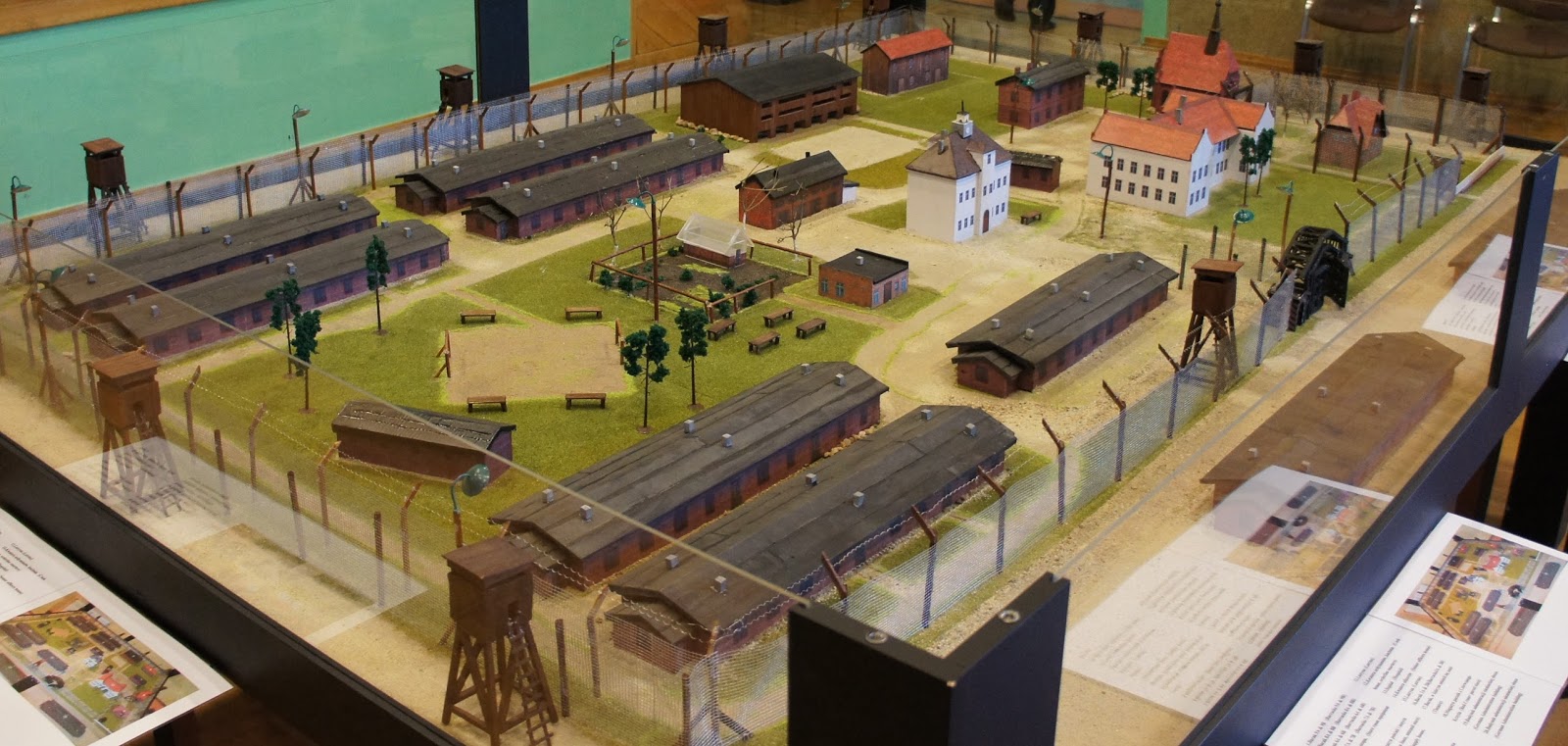
It would seem that Capt. Masny’s way ended on Hill 400, but it was not so. Otto Masny was captured by soldiers of the 272nd Grenadier Division and after two weeks of interrogation, beatings and torture, afterhaving been hit by a German fist he lost all his front teeth. Apart from personal details, he did not tell anything to the Germans and after a while he was transported through Frankfurt am Main to the officers prison camp Oflag 64 in Schubin (Szubin in today's Poland). He remained "accommodated" there until January 21, 1945. The camp commanders then decided to evacuate the prisoners before the advancing Red Army to the Hammelburg POW camp, 600km away. In icy wind and cruel cold it was a death march and about 100 ill prisoners were left on the site. Otto Masný with several other prisoners managed to escape from the transport and return to Oflag 64, where they waited to be liberated by the Red Army.

A historical shot from the Oflag 64 POW camp; soldiers are playing baseball. But the idyll was to end soon...
On January 23, 1945 the 61st Army forces occupied Szubin and the Oflag 64 POW camp under the command of Gen. Col. Belov. The Commander of the Allied Prisoner Administration Col. Frederick Drury asked Belov for an immediate repatriation of American prisoners, but he was dryly informed that repatriation would not take place; the prisoners would remain locked up behind barbed wire and if they tried to escape they would be shot with allied cordiality. The reason for this dirty trick was simple.

A monument to commemorate the Nazi German camps at today's Szubin, Poland.
The Soviets used all the American prisoners as hostages and conditioned their release by a number of requirements, which in many cases contradicted international law. It regarded mainly the handover of all Soviet prisoners captured by the Americans (sad ending for Vlasovtsy, ROA and other similar groups), unrestricted access to all concentration and POW camps liberated by the U.S. Army, the extradition of citizens of all states forcibly annexed by Russia before or during the war. The cherry on the cake was a requirement of a "reasonable" financial settlement.

We recommend visiting http://oflag64.us where you can find complete information about the camp
We cannot but quote the words of Gen. G. S. Patton from director Franklin J. Schaffner’s film of the same name. “They can go to hell, those mongoloid Russians. We gave them Berlin, we gave them Prague and god knows what else. And we should letthem dictate how we do politics? This war should not have ended;we should have dealt with the Russians quite sharply. We will fight with them anyway, so why not do it now, when we have an armyto do this. Just say a word and I will kick themall the way back to Russia where they belong."
But back to Otto Masny. He didn’t want to wait behind the barbed wire so when a courier jeep arrived at the camp, he used the momentwhen the driver left, jumped into the jeep and, accompanied by shots from Russian Shpagins, drove through the camp gate to meet his freedom. He managed to get through the chaos of post-war Europe up to the Black Sea port of Odessa (a walk of nearly 1,000 miles) and from there he was transported on March 7, 1945 aboard the Australian SS Moreton Bay ship to the American Military Hospital in Port Said in Egypt. After his recovery and return to service, Capt. Otto Masny was properly and with full honors released from the U.S. Army on October 19, 1945.

The path to freedom led Capt. Otto Masny also aboard the SS Moreton Bay transport ship
This American with Moravian-Slovak roots received The Cross of Merit for heroism at the Pointe du Hoc and there would probably be more awards were he not captured in "Green Hell”. Otto Masny died in January 1991 at the age of 73. He is buried in Wisconsin, Waukesha County, at the St. Charles cemetery.

The final resting place of the Moravian-Slovak American Ranger
© Radiodixie.cz

