Pokazywanie postów oznaczonych etykietą The Oflag 64 Item. Pokaż wszystkie posty

10 cze 2019

Niezwykły Dzień D w Oflagu 64

Susanna Bolten Connaughton

Popołudniowy nagłówek „Biuletynu Codziennego”, 6 czerwca 1944. Oflag 64 Papers, U.S. Army Heritage & Education Center

6 czerwca 1943 roku, dokładnie rok przed Dniem D, po trzydniowej podróży w zamkniętych wagonach towarowych pierwsi amerykańscy jeńcy wojenni Oflagu 64 dotarli do Szubina. Trzydziestu pięciu mężczyzn wytoczyło się ze swojego więzienia na kółkach i, pomimo dyzenterii i wyczerpania, przeszło niemal 3 kilometry do celu ich podróży. Dwa dni później i kilka godzin po swoim przyjeździe mój ojciec, podporucznik Seymour Bolten napisał między liniami swojego niewielkiego dziennika: „(…) odbyliśmy miłą podróż – pod czujnym okiem strażników”.

Rok później, 6 czerwca 1944 roku, z dala od plaż Normandii, pięciuset czternastu jeńców Oflagu 64 dokonało swojego własnego wywrotowego ataku. Wśród ich uzbrojenia znalazły się sekretne radio, tak zwany „Ptaszek”, wyjątkowe pomysły Komitetu Rozrywkowego i wysiłek niewielkiej grupy jeńców, którzy pomagali podtrzymywać morale i zapewniali przepływ wiadomości i tajnych informacji.

Jak wiadomo już czytelnikom tego bloga, podporucznik J. Frank Diggs, były reporter „Washington Post”, poprosił i otrzymał zgodę na publikowanie mającej wychodzić co miesiąc obozowej gazety. Nazwał ją „Oflag 64 Item”. Była to lekka czterostronicówka donosząca o obozowych przedstawieniach, wykładach i wydarzeniach sportowych.

Aby oficerowie w niewoli mogli pisać do domu, Niemcy wydawali im dwa formularze listowe i cztery pocztówki na tydzień. Ich korespondencja była czytana zarówno przez niemieckich, jak i amerykańskich cenzorów.

Oprócz miesięcznika „Item” jeńcy czytali również jednostronicowy arkusz wielkości plakatu, który skupiał się na wiadomościach wojennych. Jeden z jeńców, Larry Allen,  korespondent wojenny Associated Press i laureat nagrody Pulitzera, został jego pierwszym redaktorem i nazwał go „Nagłówki z AP”. Arkusz podpisywał „Biuro AP w Szubinie”.


Papier, długopisy i ołówki przychodziły z YMCA. Wiadomości pochodziły z dostarczanych przez Niemców gazet i magazynów publikowanych po angielsku i niemiecku przez nazistowskie Ministerstwo Propagandy w Berlinie oraz z jego angielsko i niemieckojęzycznych audycji radiowych nadawanych przez głośniki Oflagu 64.

Ekipa „Nagłówków z AP”. (Od lewej do prawej) Pierwszy rząd: Feldman, Long, Bolten. Z tyłu: Rossbach, Allen.

Mój ojciec, jeden z obozowych tłumaczy, tłumaczył z niemieckiego dla Allena, a razem z nim tłumaczył niemiecką propagandę. Wplatali w nią aktualizacje z „Ptaszka”, jednak na tyle dyskretnie, aby nie zdradzić ich pochodzenia.

Jeniec Dave Englander, inny z przedwojennych i powojennych dziennikarzy napisał później: „Porucznik Seymour Bolten, młody absolwent Uniwersytetu Nowojorskiego (…) miał doskonałą zdolność wynajdywania dobrych wiadomości w gąszczu niemieckiej propagandy.”

 Obozowa kenkarta mojego ojca.

Czasami, gdy wiadomości Allena zbyt sprzyjały aliantom, Hauptman Zimmerman, nazistowski oficer bezpieczeństwa wysyłał Allena na kilkudniową odsiadkę w izolatce. Starszy stopniem oficer amerykański, pułkownik Drake protestował, Allen był wypuszczany i z powrotem wracał do pisania. Po kilku miesiącach takiego cyklu Niemcy odesłali Allena do Stanów Zjednoczonych. Ze względu na jego pracę dziennikarską, pułkownik Drake zrobił wszystko, aby Larry Allen stał się jednym z niewielu cywilów, którzy otrzymali odznaczenie Brązowej Gwiazdy.

Frank Diggs zmienił nazwę arkusza wiadomości na „Biuletyn Codzienny” i nadał mojemu ojcu tytuł Redaktora Tłumaczącego. Pokój 18 „Białego Domu” stał się obozowym newsroomem, dzielonym zarówno przez „Biuletyn Codzienny”, jak i „Item”. Rysownicy map, spadochroniarz, porucznik Charles Posz i czołgista, podporucznik George Durgin, wyrysowali atramentem elegancką mapę sytuacyjną wielkości kart notatnika, aby zilustrować linie bojowe przemarszu wojsk i czołgów. Pomysłowy Durgin poczernił tusz mieszając go z sadzą, którą zeskrobał ze spodu nieskutecznych  ceramicznych grzejników barakowych. Używali tępego czerwonego ołówka, aby rysować, wymazywać i ponownie rysować zmieniające się ciągle fronty walk, wklejając, zdejmując i ponownie wklejając ich mapę sytuacyjną.

Dwa razy dziennie jeńcy ustawiali się przed przed tablicą ogłoszeń w „Białym Domu” znajdującą się przed kantyną, aby przeczytać „Biuletyn Codzienny” – około południa wywieszano aktualizacje z niemieckich gazet, a około dziewiętnastej z niemieckich audycji radiowych. Redaktor artystyczny porucznik Ken Goddard stworzył osobne nagłówki, które przyczepione były na stałe do tablicy ogłoszeń. Każde nowe wydanie „Biuletynu” przypinane było pod jednym z dwóch nagłówków – „Popołudniowe wydanie radiowe” lub „Dodatek”. Kiedy wszyscy, którzy przyszli do „Białego Domu” przeczytali już dane wydanie, arkusz z wiadomościami przenoszony był do szpitala, gdzie mogli przeczytać go obozowi pacjenci.

Majowe i czerwcowe wydania „Biuletynu Codziennego” oprawione przez introligatornię Oflagu 64. Oflag 64 Papers, U.S. Army Heritage & Education Center

Jeńcy nie byli jedynymi wiernymi czytelnikami „Biuletynu”, jedna z niewielu rzeczy, jakie mój ojciec kiedykolwiek mi opowiedział o swoim życiu w obozie, to to, że nawet Niemcy przystawali, żeby przeczytać „Biuletyn”. Wiedzieli, że było to ich najbliższe prawdy źródło wiedzy.

Po tym, jak każde z wydań powracało z tablicy szpitalnej przenoszone było do obozowej introligatorni. Obozowe „mole książkowe”, podpułkownicy Harry Hauschild, Donald Lussenden i Harry S. Picou zrobili ciemnozielone okładki z płótna ze wzmocnionym grzbietem z szerokim pasem płótna w kolorze żółtym. Po wypełnieniu każda księga zawierała wydania „Biuletynu Codziennego” z dwóch miesięcy. Mierzyła około 120 na 90 cm, miała grubość około 5 cm i ważyła około 1,3 do 1,8 kilograma. Redaktorzy „Biuletynu” planowali, że te zbindowane edycje  zataszczone zostaną przez jeńców do ojczyzny jako ich wojenna kronika.

Jesienią i zimą 1943 roku jeńcy walczyli z odmrożeniami, głodem oraz zniechęcającymi informacjami z frontu. Na wiosnę 1944 roku, aby podnieść morale i zająć czymś swoich ludzi, pułkownik Drake poprosił Obersta Schneidera o zezwolenie na rozpoczęcie przygotowań do imprezy  rocznicowej. Z błogosławieństwem Obersta, jeniecki Komitet Rozrywkowy spędził następne dwa miesiące planując uroczystości mające upamiętnić przybycie pierwszych Amerykanów do Oflagu 64 – Rocznicowego Karnawału planowanego na 6 czerwca 1944 roku.

W tym samym czasie „Biuletyn Codzienny” – jak i cała reszta świata – spekulował na temat długo oczekiwanej inwazji aliantów na Europę Zachodnią. Mężczyźni zbierający się przed tablicą biuletynu mogli przeczytać takie nagłówki:

  • 19 maja: W maju pozostają jeszcze kolejne cztery kompletnie bezksiężycowe noce doskonałe do przeprowadzenia inwazji. Redaktorzy załączyli tabelę ilustrującą fazy księżyca.
  • 20 maja: Cassino [inwazja na północne Włochy] – Preludium do Inwazji; Atak przynętą dla zwabienia większej ilości oddziałów z systemu umocnień wybrzeży Europy.
  • 24 maja: Data inwazji? Brytyjski Parlament odroczył ją do czerwca. W razie „doniosłych wydarzeń wojskowych” przed tą datą...

Jednak, w miarę jak maj przechodził w czerwiec, jeńcy tracili nadzieję. Kapitan Tony Lumpkin zapisał w swoim dzienniku z Oflagu 64, opublikowanym później jako „Captured Yesterday”: „Morale spada. Wszyscy są przygotowani na spędzenie w tym obozie jeszcze jakiegoś czasu.”

6 czerwca poranne wydanie „Biuletynu Codziennego” odwróciło swoją uwagę od wiadomości z frontu ogłaszając: „Amerykański garnizon świętuje pierwszy rok bez kobiet za drutami Szubina.”

Program rocznicowy (…) naładowany jest (…) grami, muzyką, nagrodami, wystawami, eleganckim żarciem i szesnastoaktowym rocznicowym przedstawieniem.
Jednak, zgodnie z już roczną tradycją, nie będzie żadnych kobiet.
Alokohole popłyną strumieniem w jenieckiej wyobraźni.

Poranny nagłówek z „Biuletynu Codziennego”, 6 czerwca 1944 roku. Oflag 64 Papers, U.S. Army Heritage & Education Center

O dziewiątej rano, pod dżdżystym niebem jeńcy zebrali się na Appelle. Gdy tylko strażnicy zakończyli liczenie, zespół Karnawału Półmetkowego wziął się do pracy przygotowując rozgrywki i kontener do zabawy w topielca.

Henry Söderberg, „Mile widziany Szwed” z YMCA, przybył w samą porę na uroczystości. Wjechał do obozu swoim klekoczącym samochodem na węgiel (benzyna była wtedy prawie niemożliwa do zdobycia). Jeńcy powitali go uśmiechemi i serdecznymi uściskami dłoni.

Zanim Półmetek się rozpoczął pułkownik Drake wygłosił przemowę poprzez obozowe głośniki, zapewne podobną do „Rocznicowego przesłania”, które napisał do najnowszego wydania „Item”. W całym obozie zatrzymywano się w miejscu, aby go wysłuchać. 

6 czerwca 1944 roku przypada pierwsza rocznica powstania Oflagu 64. Ostatni rok wypełniony był nieustannymi wysiłkami na rzecz poprawy warunków za obozowymi drutami tak, aby stan psychiczny i fizyczny nas wszystkich mógł zostać zachowany i poprawiony (…) Mamy teraz obóz i życie społeczne, w które wkład ma każdy z nas (…).

Przyjmijmy znowu na siebie zobowiązanie, że (…) podejmiemy większy wysiłek doskonalenia, aby powrócić do naszego życia w Ameryce lepiej przystosowani do wykonywania powierzonych nam obowiązków, a nie gorsi poprzez rolę nie do pozazdroszczenia, jaką przyszło nam przyjąć na tak długo.
 
Niech nikt nie wierzy, że jest jakieś piętno w fakcie bycia honorowo wziętym do niewoli podczas walk. Tylko ten kto walczy jest w stanie podejść na tyle blisko wroga,  aby stało się to możliwe (…).
 
Bądźcie dumni, że zachowaliście się po ludzku zarówno podczas walki, jak i w obliczu przeciwności losu (...)

Krótki moment ciszy w obozie zakończył się wiwatami. Pułkownik Drake nadał lżejszy ton przemowie witając Henry’ego. Söderberg podziękował za ciepłe powitanie i ogłosił, że 6 czerwca jest nie tylko rocznicą Oflagu 64, ale również szwedzkim świętem narodowym i setną rocznicą YMCA. Przy oklaskach i gwizdach mężczyzn w obozie Söderberg wręczył sportowe odznaczenia YMCA obozowym gwiazdom sportu.

Szczekaczki nawoływały uczestników karnawału do wzięcia udziału w grach np. strąć butelkę po mleku i wygraj kawałek niemieckiego sera (ser był tak śmierdzący, że jeńcy uzgodnili, że nikt nie może jeść go w barakach) lub najpopularniejsza zabawa – topielec z udziałem podpułkowników w roli tytułowej. Podpułkownicy mieli wysoki poziom sportowego ducha i dali się zmoczyć dla dobra sprawy. Tymczasem niemieccy strażnicy kręcili się po obwodzie próbując nie uśmiechać się na widok amerykańskich uroczystości.

Wróżbici w turbanach przepowiadali przyszłość, a jeńcy z Hawajów nosili spódniczki z trawy i tańczyli taniec hula. W barakach szubińskiego koledżu odbywała się wystawa hobbystyczna prac jeńców – rysunków, obrazów, a nawet zrobionego przez nich warsztatu tkackiego.

Około jedenastej rano oficer, który czuwał przy „Ptaszku” podszedł do pułkownika Drake’a i przekazał mu coś po cichu.

Przekazana wiadomość rozchodziła się wśród rozbawionego tłumu lotem błyskawicy, z baraku do baraku szły słowa „inwazja się rozpoczęła”. Jeńcy musieli hamować swoją radość do momentu, kiedy Niemcy nie usłyszą tej wiadomości ze swoich źródeł. Rozgrywki i zabawa w topielca toczyły się dalej.

Około trzynastej po południu niemieckie radio ogłosiło przez obozowe głośniki, że rozpoczęła się „próba inwazji”. Jeńcy już nie powstrzymywali swojej radości. Uśmiech zniknął z niemieckich twarzy. Hauptman Zimmerman natychmiast podwoił liczbę wartowników na służbie.

Ekipa „Biuletynu” ruszyła pędem do pokoju 18, aby to wszystko opisać. Nagłówek został najprawdopodobniej namalowany pędzlem, aby stworzyć grube czarne litery składające się na jedno tylko słowo. Zajmowało ono jedną czwartą strony i było szerokości całej kartki: „INWAZJA!” Potem następował napis wielkimi czerwonymi literami: „SIŁY ALIANCKIE LĄDUJĄ NA PÓŁNOCNYM WYBRZEŻU FRANCJI!!” Następnie na niebiesko: „Walka trwa”. Druga połowa kartki zajęta była przez starą niemiecką mapę Europy, na której grubym czerwonym ołówkiem zakreślono miejsca inwazji.

Kiedy obozowi dziennikarze przygotowali już najnowsze wydanie stanął nad nimi Hauptman  Zimmerman. Chciał wiedzieć, jak dużo Amerykanie naprawdę wiedzieli o inwazji, i kiedy się o niej dowiedzieli. Kapitan Doyle Yardley zapisał tamtego dnia w swoim dzienniku: „Czasami korzystniej jest pozwolić ludziom wierzyć w to, co sami chcą myśleć, zwłaszcza w czasie wojny.”

Wracając do zabawy, entuzjazm na Karnawale udzielił się wszystkim. Ludzie rzucili się na jedzenie z Czerwonego Krzyża, które zgromadzili na imprezę. Zakładający się jeńcy robili rewizję swoich szacunków terminu zakończenia wojny, i nawet dobrze znany obozowy pesymista podporucznik Billy  Bingham skrócił swoje przewidywania z 1983 na 1950 rok.

Popołudnie zamknęły rozgrywki softballu, baseballu i siatkówki, po których, o godzinie siedemnastej, nastąpiła uroczysta kolacja. W opublikowanym menu były: smażona mielonka, puree ziemniaczane ogrodowe marchewki i pudding jabłkowy. Ekipa „Biuletynu” przypięła najnowsze wydanie dodatku do wiadomości radiowych:

Z ostatniej chwili
 
Rozpoczęła się inwazja.
Największe wydarzenie wojskowe w historii rozpoczęło się dzisiaj rano, gdy zmasowane siły alianckie uderzyły na północne wybrzeże Francji (…)
Niemieckie radio informuje:„trwają ciężkie walki”.
Szef prasowy Rzeszy Dietrich donosi - „lud niemiecki rozumie doniosłość tej chwili.”
Kolejne informacje spodziewane są dzisiejszej nocy.

Po lewej: Jeden z nagłówków wielokrotnego użytku. Po prawej: Jeden z wielu popołudniowych dodatków do „Biuletynu Codziennego”, 6 czerwca 1944 roku. Oflag 64 Papers, U.S. Army Heritage & Education Center

Anglojęzyczny spiker nazistowskiego Ministerstwa Propagandy trzeszczał przez obozowe głośniki ogłaszając, że znakomita część alianckich wojsk powietrznodesantowych została „unicestwiona”.

O 19:30 w barakach Teatru Bob Rankin i jego Orkiestra otworzyła Show Różnorodności utworem „You Made Me Love You”, po którym nastąpił przegląd szesnastu najlepszych utworów ostatniego roku w wykonaniu chóru męskiego Oflagu 64. Lou Otterbein, najbardziej pomysłowy rekwizytor w teatrze pracował całe popołudnie nad końcową niespodzianką. Na zakończenie show wszyscy występujący wyszli na scenę, każdy z nich trzymał fragment baneru, który razem tworzył napis „Let’s Go Ike*!” Kiedy tłum zaczął dopingować baner, kartonowa rakieta V-1 zjechała po sznurku przewleczonym przez górną część sceny, ciągnąc za sobą kolejny baner z napisem „Let’s Go Ike!”. Publiczność oszalała. Podpułkownik Reid Ellsworth wspominał później, że kilku niemieckich strażników pokazało wątły uśmiech – zastanawiał się nawet czy może i oni również życzyli już sobie końca wojny.

[*Ike – pseudonim Dwighta Davida Eisenhowera (1890-1969) – generała armii Stanów Zjednoczonych i Naczelnego Dowódcy Alianckich Ekspedy-cyjnych Sił Zbrojnych (1943–1945), dowodził „Lądowaniem w Normandii”, był prezydentem Stanów Zjednoczonych w latach 1953–1961.]

Zdjęcie chóru Oflagu 64 opublikowane w „Item”, czerwiec 1944. Zdjęcie zrobione przez Czerwony Krzyż lub przez niemieckich strażników. Zdjęcia szczęśliwych, dobrze ubranych jeńców były dobrym materiałem propagandowym dla Niemców.

Jeńcy świętowali do 10 wieczorem, długo po godzinie ciszy nocnej. W końcu Niemcy nakazali zakończyć dzień. Następnego ranka przyjechało 650 paczek Czerwonego Krzyża z żywnością. Były to paczki „Numer 10”, które zawierały przysmak wszystkich jeńców – masło orzechowe. Tego popołudnia dotarła również przesyłka z YMCA – dwieście szwedzkich emaliowanych zestawów kuchennych, z których każdy zawierał łyżkę, nóż, widelec, talerz, rondel i patelnię.

„Morale osiągnęło szczyty” - zapisał w swoim dzienniku kapitan Lumpkin.

Tego lata i całą jesień „Biuletyn Codzienny” kontynuował śledzenie zmian na zachodnim froncie oraz na bliższym Oflagu 64 froncie wschodnim – powolne postępy sowieckiej Armii Czerwonej z dudnieniem zbliżającej się w kierunku Szubina, w ostatecznej drodze na Berlin. Pod koniec 1944 roku, kiedy liczebność obozu zbliżyła się do 900 osób, a przestrzeń w barakach robiła się coraz mniejsza, mój ojciec, Diggs, Englander i Goddard ścisnęli się w pokoju prasowym, który stał się także ich sypialnią.

Na początku stycznia 1945 roku, liczebność obozu potroiła się do 1500 osób, a większość spośród starszych stażem (ci, którzy byli w obozie od 6 czerwca 1943) straciła na wadze około dziesięciu kilogramów. Na zewnątrz leżało ponad metr świeżego śniegu, a według „Biuletynu Codziennego” temperatury dzienne w ciągu miesiąca nie przekroczyły 1°C. Aby się ogrzać jeńcy zakładali na siebie każdą sztukę swojej poprzecieranej odzieży, a w buty wkładali papier jako izolację.

7 stycznia 1945 roku dźwięk głębokiego wybuchu rozległ się po płaskich ośnieżonych polach Szubina. W całym Oflagu 64 zapadła martwa cisza. Następujący zaraz po pierwszym kolejny wybuch potwierdził nadzieje jeńców – zbliżała się sowiecka artyleria. Wśród Amerykanów nastąpiła eksplozja radości, którą – jak wspominał później kapitan Peter Graffagnino – można było usłyszeć nawet na wieżach wartowniczych.

Każdego dnia odgłosy wybuchów słychać było coraz bliżej. Jedno z ostatnich zachowanych wydań „Biuletynu Codziennego” zostało wydane 12 stycznia 1945 roku z nagłówkiem „Niemcy doświadczają zwycięstwa moralnego”.

Uciekający Niemcy zmusili większość jeńców do marszu w kierunku Niemiec. Natomiast mój ojciec, Diggs, Englander, Goddard i Durgin oraz kilkuset innych jeńców powróciło z wojny różnymi drogami, z pomocą sowieckich „wyzwolicieli” - ciężarówkami i wagonami towarowymi poprzez zniszczoną Warszawę i Odessę. Podczas trwającej miesiącami odysei Sowieci przetrzymywali mojego ojca przez kilka tygodni w obozie w Rembertowie, wojskowym mieście na, w tamtych czasach, wschodnich przedmieściach Warszawy. Był to najgorszy z obozów jenieckich, w jakim kiedykolwiek przyszło im przebywać.

Podczas całej podróży mój ojciec i Diggs nieśli ze sobą księgi „Biuletynu Codziennego”. Złodzieje ukradli im dwa ogromne tomy, a w innym ktoś wyrwał spore kawałki z połowy kartek. Po wojnie Frank Digss powrócił do Waszyngtonu i spędził kolejne trzydzieści siedem lat pracując dla U.S. News & World Report.

Sześć tygodni po powrocie do USA, mój ojciec wyruszył do Berlina jako członek rządu wojskowej strefy okupacyjnej. Jako młodszy urzędnik pomagał stworzyć demokratyczny niemiecki system polityczny. Współpracował również z niemieckimi dziennikarzami – którzy stali się jego przyjaciółmi na całe życie – nad przyspieszeniem denazyfikacji. Potem, już w CIA, w latach 50. zajmował się sprawami Europy Wschodniej i Niemiec, z czego wiele lat stacjonował w amerykańskiej ambasadzie w Bonn. Zmarł 6 czerwca 1985 roku czterdzieści jeden lat po Dniu D i Karnawale Rocznicowym w Oflagu 64.

 
 Seymour Bolten i Larry Allen w amerykańskiej strefie okupacyjnej w Berlinie, jesień 1945 roku.

W latach 70. Diggs ofiarował ocalone księgi „Biuletynu Codziennego” do  U.S. Army Heritage and Education Center. Docenił znaczenie kroniki, ze względu na ilość lekcji, jakie mogły z niej płynąć dla przyszłych pokoleń. Idąc tam i przerzucając sztywne duże strony ciężkich poplamionych ksiąg można zobaczyć luźne odręczne pismo mojego ojca z tyłu niektórych z nich. Ze skromnym wdziękiem „największego pokolenia”, dzielni, pomysłowi i niepozbawieni poczucia humoru redaktorzy „Biuletynu Codziennego” pozostawili obraz ich Dnia D za obozowymi drutami. Allen, Bolten, Diggs i wszyscy jeńcy słusznie cieszyliby się, że „Biuletyn Codzienny” ciągle informuje.

Źródła:
  • Diggs, Frank. Americans Behind the Barbed Wire.
  • Englander, Dave. “Soldier Tells of Paper ‘Published’ at Oflag 64.” Editor & Publisher, 19 May, 1945.
  • Lumpkin, Tony. Captured Yesterday.
  • Oflag 64 Papers, U.S. Army Heritage & Education Center, Carlisle, PA
  •  “Sketches from the Lives of Kriegies in Oflag 64”
  • Yardley, Doyle. Home Was Never Like This.

© 2019 Susanna Bolten Connaughton
Copyright © for the Polish translation by Katarzyna Kacprzak 

Susanna Connaughton jest Vice Prezesem Zarządu Polsko-Amerykańskiej Fundacji  Fundacja Upamiętnienia Obozów Jenieckich w Szubinie. Obecnie pracuje nad książką „The Translator” (Tłumacz) o doświadczeniach jej ojca jako jeńca wojennego.

5 cze 2019

A Remarkable D-Day at Oflag 64

by Susanna Bolten Connaughton

Afternoon headline of “The Daily Bulletin,” June 6, 1944. Oflag 64 Papers, U.S. Army Heritage & Education Center

On June 6, 1943 –  exactly one year before D-Day – the first American POWs of Oflag 64 arrived in Szubin, after a three-day train trip locked in a box-car. The thirty-five men stumbled out of their rolling prisons and, despite dysentery and exhaustion, walked the almost two miles to their destination. Two days later, and a few hours after his own arrival there, my father, 2nd Lieutenant Seymour Bolten, wrote between the lines in his tiny journal: “…had a nice trip – heavily guarded.”

One year later, on June 6, 1944, far from the Normandy beaches, the five-hundred-fourteen Kriegies of Oflag 64 executed their own subversive attack. Their weapons included their secret radio, “The Bird”; the resourceful creations of their Entertainment Committee; and the efforts of a small group who had helped keep spirits up and news and clandestine information flowing.

As readers of this blog know, 2nd Lieutenant J. Frank Diggs, a former Washington Post reporter, asked and received permission to publish a monthly camp newspaper. He named it the Oflag 64 Item, a lighthearted four-pages that reported on camp shows, lectures, and sporting events.

To write home, the Germans gave the POW officers 2 letter forms and 4 postcards per week. Both German and U.S. censors read their mail.

In addition to The Item, the POWs also read a one-page, poster-sized, daily news sheet that focused on war news. Kriegy Larry Allen, a Pulitzer-prize winning Associated Press war correspondent, was its first editor and called it Headlines by the AP. He bylined the news sheet the “Szubin Bureau of the AP.”

The paper, pens, and pencils came from the YMCA. The information came from the German-supplied newspapers and magazines published in English and German by the Nazi Propaganda Ministry in Berlin, and its English and German-language radio broadcasts piped in over the Oflag 64 loudspeakers.

Staff of "Headlines from the AP". Front Row: left to right: Feldman, Long, Bolten.  Back Row: Rossbach, Allen

My dad, one of the camp translators, translated the German for Allen, and together the two of them translated the propaganda. They wove in the updates from the Bird, with just the right touch so as not to reveal their source.

Kriegy Dave Englander, another pre and post-war newsman, later wrote: “Lt. Seymour Bolten, a young graduate of New York University…had an excellent faculty for digging a good news story out of the jungle of German propaganda.”

 My father’s POW ID card

Sometimes, if Allen’s reporting was too favorable to the Allies, Hauptman Zimmerman, the Nazi Security Officer, would send Allen to solitary confinement for a few days. Senior American Officer Colonel Thomas Drake would protest, Allen would get released, and then go back to writing. After a few months of this cycle, the Germans returned Allen back to the United States. For his press work, Colonel Drake made sure that Larry Allen became one of the rare civilians to receive a Bronze Star.

Frank Diggs renamed the news sheet The Daily Bulletin and gave my dad the title Interpreting Editor. Room 18 of the White House became the camp’s one newsroom, shared by both The Daily Bulletin and The Item.  Map illustrators, Paratrooper 1st Lieutenant Charles Posz and Tanker 2nd Lieutenant George Durgin, inked out elegant Situation Maps the size of notecards to illustrate the battle lines of the complex parade of troops and tanks. The resourceful Durgin blackened the ink by mixing it with soot he had scraped from the bottom of the barracks’ ineffective ceramic heaters. They used a blunt red pencil to draw, erase, and redraw the everchanging battlefronts, as they pasted, peeled off, and reposted their Situation Maps.

Twice a day, the POWs lined up at the “White House” bulletin board outside the Mess Hall to read The Daily Bulletin: at around noon for updates from German newspapers, and around 7pm for the updates from German radio broadcasts. Art Editor 1st Lieutenant Ken Goddard created Daily Bulletin masthead posters, which remained tacked to the bulletin board. Each new issue was pinned below a masthead that read either: “Late Radio Edition” or “Extra.” After everyone who filed through the White House had read an issue, a staffer would move the newssheet to the Hospital, for the readers there.

May & June Issues of “The Daily Bulletin,” bound by the Oflag 64 Book Bindery. Oflag 64 Papers, U.S. Army Heritage & Education Center

The Kriegies were not the only loyal readers: one of the few things my dad ever told me about his POW life was that even the Germans stopped by to read The Bulletin. They knew it was their most accurate source of information.

When each issue came down from the Hospital bulletin board, a staffer walked it over to the Book Bindery. The “book gnomes,” Kriegies 2nd Lieutenant Harry Hauschild, 2nd Lieutenant Donald Lussenden, and 2nd Lieutenant Harry S. Picou, created a deep green canvas cover and reinforced the spine with a wide strip of yellow canvas. When filled, each book held two months of Daily Bulletins, measured about four feet by three feet, two-inches thick, and weighed about three or four pounds each. The Bulletin editors’ plan for these bound editions was that the Kriegies of Oflag 64 would haul home their chronicle of the war.

Through the Fall and Winter of 1943, the POWs endured frostbite, near starvation, and disheartening war news. In the Spring of 1944, to boost morale, and to keep the POWs occupied, Colonel Drake asked Oberst Schneider’s permission for the men to plan a one-year anniversary party. With the Oberst’s blessing, the POW Entertainment Committee spent the next two months planning the festivities to commemorate the arrival of the first Americans at Oflag 64 – an Anniversary Carnival on June 6, 1944.

At the same time, The Daily Bulletin – along with the rest of the world – speculated on the much-anticipated Allied invasion of Western Europe. The men who gathered around the bulletin board read headlines like these:

  • May 19: Four more completely moon-less invasion-perfect nights remain in May. The editors pasted in a Moon Table illustration
  • May 20: Cassino [invasion of Northern Italy] – Prelude to Invasion; Attack Seen as Bait to Lure More Troops From Europe’s Invasion Coast Defense
  • May 24: Invasion Date? The British Parliament has adjourned until June. In case of “great military events” before that date…

But, as May became June, the POWs grew discouraged. Captain Tony Lumpkin wrote in his Oflag 64 journal later published as Captured Yesterday, “The morale is down. All are prepared to spend some time in this camp.”

On June 6th, the morning edition of the Daily Bulletin turned its attention away from war news and announced, “American Garrison Marks First Women-less Anniversary Behind Schubin Barbed Wire.”

The Anniversary Program… is combat-loaded… with games, music, awards, an exhibit, elegant chow, and a 16-act anniversary revue. 
But no women – in keeping with [a] now year-long tradition. 
Liquor will flow like water, in the Kriegy imagination.

 Morning headline of the “The Daily Bulletin,” June 6, 1944. Oflag 64 Papers, U.S. Army Heritage & Education Center

At 9am, the Kriegies assembled for Appelle, under a drizzly sky. As soon as the guards completed the counting, the Carnival Midway team got to work setting up games and a dunk tank.

Henry Söderberg, the “Welcome Swede” from the YMCA, arrived just in time for the festivities. He puttered into camp in his new coal-burning car (gasoline was close to impossible to get). The Kriegies greeted him with smiles and hearty hand-shakes.

Before the Midway opened, Colonel Drake gave a speech over the camp loudspeaker, no doubt similar to the Anniversary Message he wrote for the most recent issue of The Item. Around the camp, men stopped in place to listen.   

June 6, 1944, marks the first anniversary of Oflag 64. The past year has been filled with ceaseless effort to improve conditions inside the barbed wire so that the mental and physical life of all might be maintained and improved… [W]e now have a camp and community life, contributed by each and everyone…
 
Let us, anew, pledge ourselves that…we will see a greater effort to better ourselves so that we may return to our place in the American life better fitted to carry on the duty assigned to us and none the worse for the unenviable role which we have carried so long.
 
Let no man believe that there is a stigma attached to having been honorably taken captive in battle. Only the fighting man ever gets close enough to the enemy for that to happen…
 
Be proud that you carried yourselves as men in battle and in adversity…

A brief moment of silence inside the wire erupted into cheers. Colonel Drake lightened his previous words by welcoming Henry. Söderberg thanked the men for their warm welcome and announced that June 6th was not only the date of Oflag 64’s one-year anniversary, but also, Swedish National Day, and the 100th anniversary of the International YMCA. The men applauded and whistled, and Henry awarded YMCA Sports Badges to the camp’s star athletes.

The barkers enticed the carnival goers to try their games. Knock over a milk bottle, and win a hunk of German cheese (this cheese was so stinky that the men agreed that no one was allowed to eat it inside the bunkhouses), or the most popular – the Lieutenant Colonel Dunk Tank. The Lt. Colonels were good sports and got soaked for the cause. Meanwhile, the German guards peppered themselves around the perimeter, trying not to smile at the American celebration.

Fortune tellers wearing turbans could predict your fate, and the POWs from Hawaii wore grass skirts and danced the hula. Indoors, in the “Little College of Szubin” barracks, the men toured the Hobby Show’s exhibit of POW handiwork: sketches, oil paintings, and even a POW-made loom.

Around 11am, the officer who had been monitoring the Bird sidled up to Colonel Drake and spoke to him in a hushed tone.

The message galloped through the carnival crowd, barrack by barrack, “the invasion is on.” The POWs had to stifle their joy until the Germans heard the news from their own sources. The dunk tank and games continued.

Around 1pm, German radio blasted over the camp loudspeakers that the “invasion attempt” had begun. The POWs let loose their pent-up cheers. The smiles faded from the Germans’ faces. Hauptman Zimmerman immediately doubled the number of guards on duty.

The Bulletin staffers rushed back to Room 18 to write it up. The headline writer could have used a paintbrush to create the thick black letters of his one-word headline. It took up a quarter of the page, and the sheet’s entire width: “INVASION!” Followed by big red all caps: ALLIES LAND IN FORCE ON NORTH COAST OF FRANCE!!” And, then, in blue: “The Battle is On.” The other half of the page displayed an old German map of Europe, on which a staffer had circled the invasion spots with thick red pencil.

As the Kriegy journalists dashed out the issue, Hauptman Zimmerman stood over them. He wanted to know how much the Americans really knew about the invasion. And, when they knew it. Captain Doyle Yardley wrote in his journal that day, “Sometimes it’s more advantageous to let people believe what they want to think, especially in times of war.”

Back on the Midway, the enthusiasm at the Carnival kicked into unbridled high gear. The men “bashed” the Red Cross food they had pooled for the party. The betting POWs revised their end-of-the-war estimates, and even well-known pessimist 2nd Lieutenant Billy Bingham revised down his prediction from 1983 to 1950.

Softball, basketball, and volleyball matches concluded the afternoon, followed by a festive dinner at 5pm. The published menu was: fried Prem, mashed potatoes, garden carrots, and apple pudding. The Bulletin staffers pinned up a new edition to the Radio Flash:

Flash
 
The invasion has begun.  
The Greatest military event in history started this morning when mighty Allied forces smashed at the 
North Coast of France… 
German radio reports “heavy fighting is in progress.” 
Reich Press Chief Dietrch says, “the German people understand the significance of the moment.”
More Details Expected Tonight.

Left: One of the reusable mastheads. Right: One of several afternoon updates from the “The Daily Bulletin,” June 6, 1944. Oflag 64 Papers, U.S. Army Heritage & Education Center

The Nazi Propaganda Ministry’s English-language radio announcer crackled over the camp loudspeakers. He proclaimed that the greatest share of the Allied airborne troops had been “annihilated.”

At 7:30pm, in the Theater barracks, Bob Rankin and his Orchestra opened the evening Variety Show with “You Made Me Love You,” followed by a revue of the top sixteen Oflag 64 Glee Club hits of the past year. Lou Otterbein, the most resourceful prop man in theater, had been working all afternoon on a surprise ending. At the end of the show, all the performers came out on stage, each holding a piece of a banner that when combined read, “Let’s Go Ike.” As the crowd cheered the banner, a cardboard V-1 rocket breezed down a wire strung over the top of the stage, trailing another “Let’s Go Ike” banner. The audience went wild. 2nd Lieutenant Reid Ellsworth remembered later that even a few of the guards cracked a small smile – he wondered if maybe they too were wishing for the end of the war. 

Oflag 64 Glee Club as published in “The Oflag 64 Item,” June 1944. Photo Credit either the Red Cross or the German guards. Photos of happy well-dressed POWs were good propaganda for the Germans.

The POWs celebrated until 10pm, well past Lights Out. Finally, the Germans ordered an end to the day. The next morning, six-hundred-fifty Red Cross Food Parcels arrived – they were the Red Cross’ “Number Ten” type of parcels, which contained everybody’s favorite, peanut butter. That afternoon a shipment from the YMCA arrived: two-hundred Swedish enamel cooking kits, each one containing 1 spoon, 1 knife, 1 fork, 1 plate, 1 saucepan, and 1 frying pan.

“Morale is tops,” wrote Captain Lumpkin in his journal.

That Summer and throughout the Fall, The Daily Bulletin continued to track the changing Western Front, and – closer to Oflag 64 – the changing Eastern Front: the slow advancement of the Soviet Red Army, rumbling toward Szubin, on its way to Berlin. Near the end of 1944, when the camp population approached 900 and barracks space tightened, my Dad, Diggs, Englander, and Goddard, squeezed into the news room and made it their bunk room as well.

By early January 1945, the camp population had tripled to about 1,500, and most of the “old men” (those who had been there since June 6, 1943) had lost about twenty pounds each. Several feet of new snow lay outside, and, according to The Daily Bulletin, the daytime temperatures had not pushed past 29 in a month. To stay warm, the Kriegies wore every article of their threadbare clothing, and stuffed paper insulation into their boots.

On January 7, 1945, the sound of a deep boom glided across the flat snow fields of Szubin. All of Oflag 64 fell silent. The immediate next boom confirmed the Kriegies’ hope: Soviet artillery. The Americans erupted into cheers, which Captain Peter Graffagnino later said could be “heard all the way to the top of the guard towers.”

Each day, the booms crept a little closer. One of the last surviving issues of The Daily Bulletin was published on January 12, 1945, headlined, “Germans See Moral Victory.” 

The fleeing Germans would force march most of the POWs to Germany. My dad, Diggs, Englander, Goddard, and Durgin, and a few hundred others would leave the war through various routes, courtesy of the “liberating” Soviets – via trucks and boxcars through a devastated Warsaw and Odessa. During the months-long odyssey, the Soviets held my dad and the others for several weeks at a refugee camp in Rembertów (a military town just east of Warsaw), worse than any of the POW camps they had experienced.

Throughout the journey, my dad and Diggs lugged the Daily Bulletin books. Thieves stole two of the giant tomes, and someone ripped a big chunk out of half of the pages of another. After the war, Frank Diggs returned to Washington, DC, and spent the next thirty-seven years working at U.S. News & World Report.

Six weeks after returning to the U.S., my dad left for Berlin, as part of the occupying Military Government. As a junior staffer, he helped rewrite Germany’s democratic political system, and he worked with German journalists – who became his lifelong friends – to advance de-Nazification. Then, at the CIA, he spent the 1950s covering Eastern European and German affairs, including several years stationed at the U.S. Embassy in Bonn. He passed away on June 6, 1985, forty-one years after D-Day and the Oflag 64 Anniversary Carnival.

 
 Seymour Bolten and Larry Allen in the American Zone of Berlin, post-war, Fall 1945


In the 1970s, Diggs donated the surviving Daily Bulletin books to the U.S. Army Heritage and Education Center. He recognized the importance of their chronicle – for a range of lessons during the war, and for generations to come. If you go there and turn the stiff big pages of the sturdy and stained books, you’ll see my dad’s loopy handwriting on the backs of a few of them.
With the modest grace of the “Greatest Generation” – brave, resourceful, and with a glint of humor – the publishers of The Daily Bulletin have left behind a picture of their D-Day from behind the barbed wire. Allen, Bolten, Diggs, and all the Kriegies would and should be glad to know that The Daily Bulletin is still reporting.

Sources:
  • Diggs, Frank. Americans Behind the Barbed Wire.
  • Englander, Dave. “Soldier Tells of Paper ‘Published’ at Oflag 64.” Editor & Publisher, 19 May, 1945.
  • Lumpkin, Tony. Captured Yesterday.
  • Oflag 64 Papers, U.S. Army Heritage & Education Center, Carlisle, PA
  •  “Sketches from the Lives of Kriegies in Oflag 64”
  • Yardley, Doyle. Home Was Never Like This.

© 2019 Susanna Bolten Connaughton

Susanna Connaughton is the Vice President of the Board of the Polish-American Foundation for the Commemoration of POW Camps in Szubin. She is working on a book, The Translator, about her father's POW experience.

19 maj 2016

About the Kapsa’s printing house where Kricks printed ‘The Item’


During WWII, between November 1943 and January 1945, the American Officers, POWs in Oflag 64, published the camp newspaper named “The Oflag 64 Item”. There were fifteen issues in total, released monthly. In fact there was no issue for January 1944, but in December 1943 the paper was published twice – at the beginning of month and shortly before Christmas. The newspaper usually consisted of four pages, but three times an issue consisting of 6 pages was published – in April, October 1944 and in January 1945, and once – in June 1944 – it had 8 pages. It was the anniversary issue, to emphasize, or rather to celebrate [sic!] the first anniversary of incarceration in Oflag 64. The circulation grew from 250 copies for the first issue to over 1400 for the last issue – each prisoner had his own copy from the beginning to the end.

The Christmas issue, December 1943, printed with green ink (digital copy from Susanna Bolten Connaughton).

***

It was the first Polish printing house founded in Szubin after Poland regained its independence in 1918. In 1920 Józef Kapsa (born in 1892) bought the property at Paderewski Street 7. He settled there with his family, and the outbuildings located in the courtyard were transformed into a printing press and bindery.

After 1850, in the city of Szubin, the German print house and bindery operated, where during Prussian times the following newspapers were printed: “Kreisblatt des Szubiner Kreises” (Official Journal of Szubin County), “Schubiner Kresiblatt” (Szubin County Journal) or “Schubiner Zeitung” (Szubin County Newspaper). After 1919, the last German owner of this print house, Fritz Lach, continued his printing house and printed the newspaper, “Orędownik na powiat szubiński” (The Spokesman for Szubin County) in Polish and German.

 
The headers of “Schubiner Kresiblatt” and “Schubiner Zeitung” (source: Muzeum Ziemi Szubińskiej).

The Kapsa printing house, soon filled with the best printing machines available on the market and a richly equipped typesetting room and bindery, became a very prosperous business, providing services for institutions, as well as for the residents of Szubin County. According to “Dzieje Szubina” (The History of Szubin), the press enjoyed  relatively high readership among the people of Szubin and played an important role in shaping the culture. Since 1925, and until the outbreak of World War II, printing of the Szubin County Newspaper, published in the interwar period under the titles: “Orędownik Urzędowy Powiatu Szubińskiego”, “Orędownik Powiatowy Powiatu Szubińskiego”and “Orędownik Powiatu Szubińskiego” (variations around: The Official Spokesman of the Szubin County) was entrusted to the Józef Kapsa printing press. The paper, which was the official organ of the municipal and the county authorities, was issued twice a week and contained various ordinances, communications, and news from local organizations and associations.

 The headers of “The Spokesman…”, printed by Lach (upper), and printed by Kapsa (lower) (source: Kujawsko-Pomorska Biblioteka Cyfrowa).

Invoice form printed in Kapsa’s printhouse (source: Muzeum Ziemi Szubińskiej).

A few days after the outbreak of World War II in Poland (September 1st, 1939), the German Army annexed Szubin. On Tuesday, September 5th, on the main square of Szubin the local Germans welcomed approximately 20 soldiers, who arrived in two cars and several motorcycles. The new Nazi German authorities from the very first days of their tenure began a planned extermination of the Polish population of Szubin County. Since the moment of the creation of the Posen Reich District, (initially called Reichsgau Posen, later The Reichsgau Wartheland), Wielkopolska (The Greater Poland), including Szubin and the Szubin County were incorporated into the territory of the Third Reich.

Nazi German soldiers at the main square Szubin, September 5th, 1939 (source: Muzeum Ziemi Szubińskiej).

In the first weeks of Nazi German occupation, Józef Kapsa was deprived of his print shop like many other homeowners and business owners in Szubin. Expropriation by the Nazis followed by rules “In fünf minute raus” (“Get out in five minutes”). Military police officers would give orders to entire families to leave their premises within a few minutes. Each family could bring no more than 50 kg of luggage, mainly food and personal clothing, and all valuables were confiscated. The evicted residents of Szubin were gathered at the Polish House (Dom Polski) located at the School Street, at which the German occupiers established the temporary displacement camp (Umsiedlungslager) for displaced people. The Kapsa family was divided. Józef’s son Adam (born in 1924), who had begun to apprentice in his father’s printing shop before the war, together with his mother and the rest of the family, managed to escape to their old family homein Wągrowiec (Eichenbrück), while Józef was displaced along with other families from Szubin to the General Governorate. He spent practically the entire five years of WWII in Minsk Mazowiecki trying to secure physical labor of various kinds, for example sweeping the streets.

During the German occupation, the Kapsa printing house had no administrator for some time. Hearing this rumor, the native of Szubin County, whose ancestors came from East Prussia, returned to Szubin. His grandfather, Franz Nicolaus Krix, was born in Grudziądz (Graudenz), while his father, Paul Kriks was born in Bydgoszcz (Bromberg). Paul Kriks, married Maria Magdalena nee Sułkowska and had thirteen children. To the youngest, born in 1907 in Rynarzewo (Netzwalde), they gave the name Willi Richard. Paul Kriks was a chimney sweeper and when he got the position of master in the Szubin railway circle, he moved to Szubin and bought a house on Raatz Street (Raatzstraße, currently Winnica Street).

Willi Kricks attended school in Szubin, and after completing school – as described by his son Rainer – Willi trained in typesetting at the Fritz Lach printing house on Bydgoska Street (Bromberger Straße). This information is inaccurate, inasmuch as according to the German city plan of Szubin (supposedly earlier than the date indicated in the caption), there was the Kapsa printing press (marked with a green spot) on Bydgoska Street, and the Lach printing house in the other place (marked with a red spot). It is not known to the author exactly when the name of Bydgoska Street was changed to Paderewski Street, but might have been in the 1920s.

The city plan of Szubin, dated 1935 according to the source, but supposedly it was the city plan of Szubin before 1919 (source: “Der Kreis Schubin”).

The Kricks family left Szubin in 1927, for political reasons, and settled in Haale/Saale (Germany). Most likely at the same time, the German printer Lach closed his print house and also left Szubin. Willi married in 1935 in Halle/Salle and got the position of Composing Room Manager for the “Die Mitteldeutsche Nationalzeitung” newspaper. In 1940, wanting to be closer to his small fatherland, he successfully applied for the position at a newspaper issued in Poznan. From there he repeatedly visited Szubin. When he learned that the Polish owner (Józef Kapsa) of the printing press at Szubin was expropriated, and the print house needed a financial manager (fiduciary), he decided to apply for the job and return to Szubin. Over time, the opportunity arose to buy the print house from  the German authorities. In the printing house operated under the management of Kricks, a number of Polish workers were employed including a typesetter, a bookbinder, an apprentice, a female helper, and Józef Kluczkowski, who worked as a foreman (overseer) and typesetter and, like Willi Kricks, supposedly apprenticed at the Fritz Lach print shop. Mr. Kluczkowski’s daughter, who helped deliver leaflets, was also at the printing house. At that time, a monthly newspaper, the “Altburgund Heimatbote” (Fatherland messenger from Altburgund), was printed, addressed to German soldiers on the front.

The header of “Altburgunder Heimatbote” (issue from October 1944) printed by Kricks (digital copy obtained from Rainer Kricks).

The photograph of the Evangelical Church in Rynarzewo, 1900/01, taken from the article on the first page of "Altburgunder Heimatbote” (digital copy obtained from Rainer Kricks).

Full issue of “Altburgunder Heimatbote”:
Page 3 upper | Page 3 lower | Page 4 upper | Page 4 lower 

 The post-evangelical church in Rynarzewo (Netzwalde). Currently church of St. Stanislaus, Bishop and Martyr, 2016.

In 1943, Willi Kricks was conscripted into the Wehrmacht, while running the printing was taken over by his wife Anni. As Rainer Kricks emphasized – his father never was a member of NSDAP, though he was naturally a staunch German patriot.

Rainer Kricks at the doors of the printing house; Willi Kricks with his children Rainer and Brigitte in the garden at the backyard of the residential building; photos taken in 1943 (private archive of Rainer Kricks).

Willi was a guard at Oflag 64, and when the Americans learned that he operated the printing house in the town, the idea of printing the camp newspaper was born: “Considering the circumstances, it was hard to imagine why Germans agreed to such a project, and more that “The Oflag 64 Item” was printed in the printing house taken over from the Poles, currently owned by one of the guards of the camp, Willi Kricks”. Frank Diggs, the chief editor of the camp newspaper, years later recalled – “the printing was done by the wife of the guard, (...) and the Polish staff turned out to be very helpful, especially in the typesetting”. In his book “Americans Behind the Barbed Wire”, Diggs wrote: “It [the Item] was printed by Willi Kricks, the same German guard who was operating the print shop in nearby Schubin and who assisted Don Lussenden in setting up the camp bookbindery. With a staff of four Polish printers, Willi did a good job of it too after all the language typos were corrected. Every month I would be escorted by an armed guard to the print shop downtown, usually accompanied by Larry Phelan or Seymour Bolten, a New Yorker who spoke fluent  German.”

As Rainer Kricks recalls: “Since the organization of printing the newspaper required investments, my father was transferred to security personnel [of the camp], in order to organize the purchase of sets of new fonts, and other professional equipment. During the editing of the camp newspaper the experienced professionals among American prisoners of war worked for us as typesetters. Good contacts were established between us. My father was a German patriot, for whom the obvious duty was to engage on the side of his country. This does not mean, however, that there was any improper relation to people or any kind of ill-treatment. His behavior in relation to the Polish associates, as well as to the prisoners of war was characterized by responsibility, reasonableness and a willingness of mutual assistance in the difficult times of war”. This was confirmed in my conversation with the daughter of Józef Kluczkowski who said: “Kricks always treated Poles working for him very well. My father used to repeat this many times”.

“The Americans left their home addresses with my father – said Rainer Kricks – which he could use after the war in case any help was needed. I remember Carl Hansen [1st Lt.  Carl V. Hansen ] – the professor of German philology and Carter [2nd Lt Amon G. Carter Jr.] – the owner of one of the larger newspapers in Fort Worth, Texas. Both [after the war] sent us parcels to the Soviet occupation zone [Deutsche Demokratische Republik] and we have maintained a correspondence”.

In autumn 1944 Kricks started rebuilding the right side of the barn located behind the printing house. In order to expand the printing equipment he also purchased the press of Johannisberger Schnellpresse which – as Rainer mentions – already lacked printing rollers, which were cast in Leipzig. As Rainer Kricks also recalls –  in the typesetting room some fonts for printing the American newspaper were missing, so with the approval of the German authorities he bought more of them at the Bauer Type Foundry in Frankfurt am Main, among them the “Bodoni-Antiqua” typeface known around the world.

On  January 21st, 1945 the American POWs were evacuated to the West. Also on that day, Willi Kricks with his family, like the vast majority of local Germans, left Szubin with a horse-driven cart.

After his return to Szubin in 1945 Józef Kapsa took back his home and found his printing press in surprisingly good condition, so immediately returned to work. He was able to run it as an owner until 1949, when according to the new nationalization law [the process of transforming private assets into public assets by bringing them under the public ownership of a national government or state] introduced by the Communist government, the print shop with all the equipment was taken from him again. He was an established specialist and therefore he was allowed to continue working in the printing house, together with his son Adam, but the state-owned printing facility was established and the managing director was posted by the local authorities (actually several during those years). He kept his home, in which the Kapsa family was allowed to live, although the Communist authorities would not allow them to fully manage it – every now and then sub-tenants were assigned to them or part of the house was assigned for other purposes, such as the separate apartment for a teacher of the nearby school or store.

Marek Kapsa, grandson of Józef, recalled growing up in the environment of this business and even today, after many years, he would be able to recreate the print house as it was from his memory. He also recalled that his grandfather Józef and father Adam were often persecuted by the Communist authorities – for example, they were repeatedly fired. Marek also started training to be a printer, but later worked in the other print shop.

Józef Kapsa retired in 1968 and died soon thereafter in 1970. The printing house, which he founded in Szubin, together with all its pre-war equipment operated until the beginning of the 1970s. In 1974, it was liquidated and the machines were transported to another printing house in Żnin.

Józef Kapsa (from private archive of Marek Kapsa).

After the war Willi Kricks leased a printing house in Beetzendorf/Altmark in Eastern Germany. In June 1950, however, he fled from the Communists to Western Germany. Through the refugee camps in Uelzen, Freiburg/Breisgau and Osthofen he arrived at the Westhofen Worms, which became his new home. Willi Kricks, with his wife Anni, revisited Szubin in the 1970s. They then visited Mr. and Mrs. Kluczkowski and the printing house of Józef Kapsa. Willi died on March 16th, 1988 in Westhofen.

In 1951 his son Rainer began to apprentice as a typesetter. After passing the master exam and after several years of practice in another printshop, he took over his father’s printing house in Westhofen and ran it until it was taken over by his son Volker, a graduate engineer in printing.

The beginning of a free Poland presented a new opportunity for reprivatization [the process of restoring to its former owners properties seized by a government or the process of compensating previously uncompensated former owners], but despite many attempts through the years 1990-2008 to finalize the process of such regulations, Poland remains the only country of the former Soviet bloc, in which this re-privatization has not been carried out. Adam Kapsa (the son of Józef) and his descendants have never received any compensation. He died suddenly in 1992. Thereafter the Kapsa family was able retain the buildings, but never got back the equipment.

The Kapsa family still lives in the same place at Paderewski Street. The buildings which used to be the print shop where “The Oflag 64 Item” was printed, now house the professional recording studio Electric Eye HD and record label Electric Eye Records owned by Kuba Kapsa and his brother Bartek Kapsa, who are great-grandsons of Józef Kapsa, and musicians associated with bands like Something Like Elvis, Contemporary Noise Quintet (Sextet), Kuba Kapsa Ensemble or Tropy.

Buildings of former printing shop of Józef Kapsa, 2016.

***

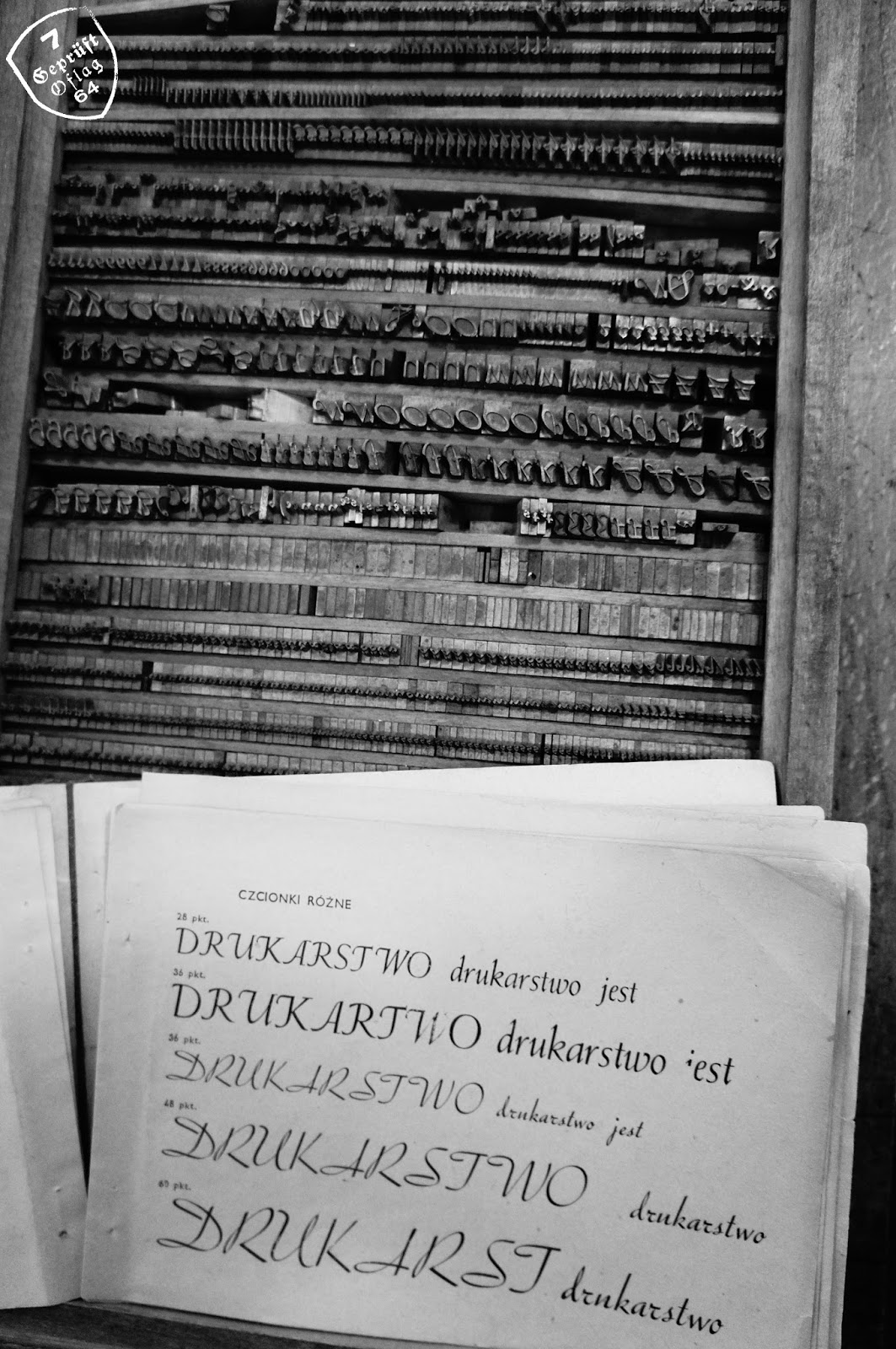
In searching for the printing machines from the Szubin printhouse, I’ve traveled to Żnin where, after the liquidation of the Kapsa’s printpress, his machines were taken. I believe it is probable that the printing machines from Kapsa’s printshop may be among the collections at the exhibition dedicated to the history of local printing in Muzeum Ziemi Pałuckiej. For example, the machines from the Reform School at Szubin can be found at the exhibition. After WWII, in one of the barracks built by prisoners of war, another printing house operated until 1994. However, no one has actually been able to confirm whether any of the machines located there were in fact taken from the Kapsa printshop.

Looking through accurate pictures of machines collected in the Museum, Rainer Kricks has found that as far as he remembers, the Victoria printing press was certainly equipment of his father’s print shop (or Kapsa’s) in Szubin (“Der Victoria-Tiegel im Vordergrund sowie der Boston-Tiegelstandenwohl in der Druckereimeines Vaters bzw. Bei Kapsa”).


Acknowledgements:

My special thanks to Marek Kapsa, grandson of Józef Kapsa and to Rainer Kricks, son of Willi Kricks, for sharing their time and memories. Thanks to Muzeum Ziemi Pałuckiej for permission to take photos at the exhibition dedicated to the history of printing at Pałuki region and thanks to Muzeum Ziemi Szubińskiej for providing photos for the article. My special thanks also to Elodie and Bill Caldwell for regular editing and proofreading of the English language versions of my entries.

Sources:
  • "Dzieje Szubina", Marian Biskup (ed.), Warsaw-Poznań, 1974.
  • "Spacer z historią w tle" by Kamila Czechowska, Urząd Miejski w Szubinie, Szubin, 2015.
  • "Der Kreis Schubin", Heimatkreis Schubin - Altburgund e.V., Bergen, 1990.
  • "Oflag 64 The Fiftienth Anniversary Book", Evanston Publishing, inc. Evanston Illinois, 1993.
  • "Americans Behind the Barbed Wire. World War II: Inside a German Prison Camp", by Frank J. Diggs, Vandamere Press, 2000.

© Mariusz Winiecki